
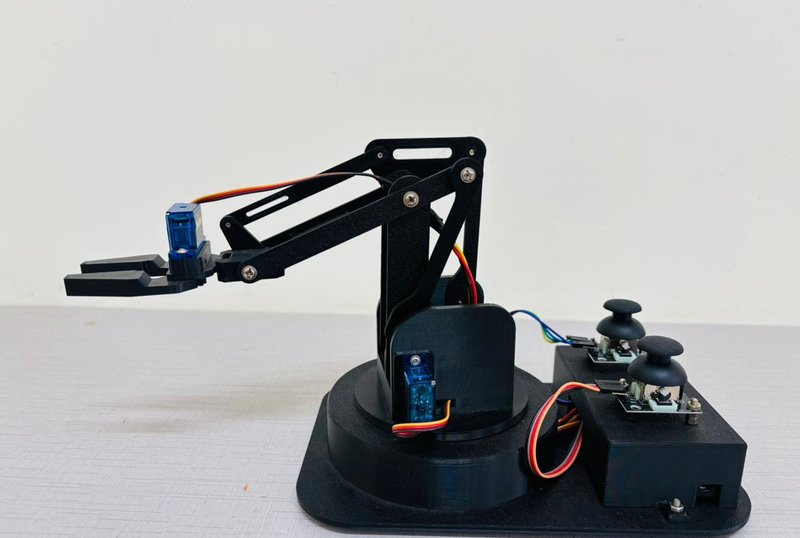
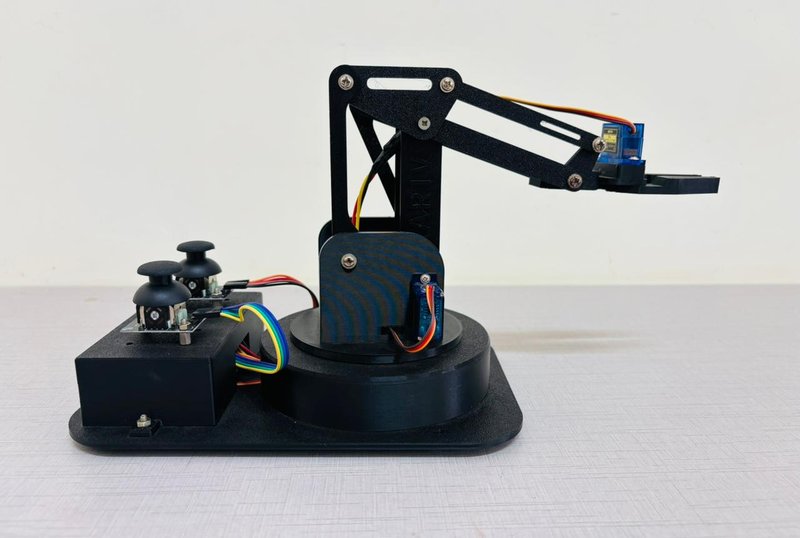
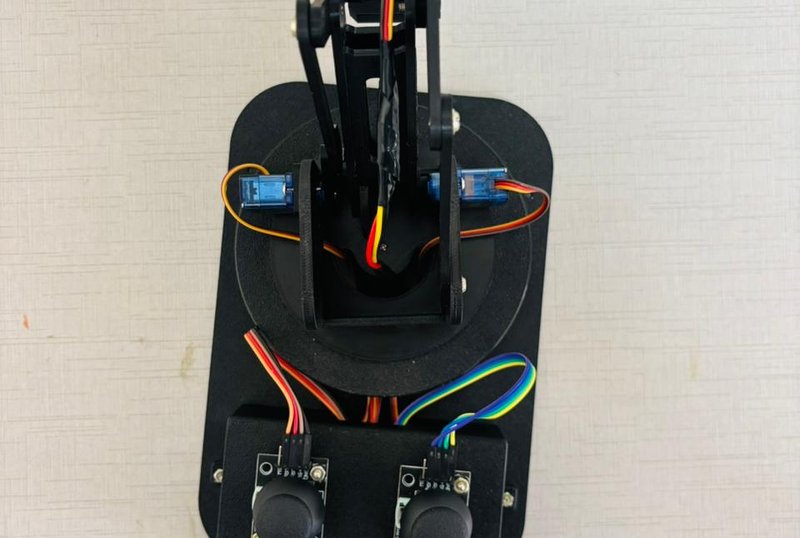
DIY Robotic Arm Mechanic Kit
A DIY robotic arm kit for students and beginners to learn assembly, motion control, grip movement, and basic automation through hands-on robotics building.
Key Features
- Easy DIY Mechanical Assembly
- Motorized Multi-Axis Movement
- Beginner-Friendly Learning Kit
- Durable Precision-Cut Parts
- Perfect for STEM Projects and Workshops
Use Cases and Learning Value
This electronics solution is designed for practical implementation in academic labs, innovation cells, workshops, and guided project environments. It helps learners move from basic conceptual understanding to hands-on system development by working with real components, measurable outputs, and iterative testing.
During development cycles, users can explore integration patterns, component-level behavior, and reliability considerations that are essential for real-world deployments. This makes the product suitable not only for demos, but also for structured technical training, mentor-led assignments, and proof-of-concept development.
Teams using this platform can document outcomes, compare design choices, and improve implementation quality over time. Whether your goal is curriculum delivery, prototyping, or innovation challenge preparation, this product supports clear progression from guided learning to independent engineering execution.
Recommended Implementation Workflow
To maximize outcomes, we recommend beginning with a short orientation phase where learners identify components, understand operating constraints, and define expected performance goals. This step creates a clear technical baseline and reduces common setup issues during practical sessions.
Next, teams should move into iterative implementation: assemble, test, observe, and refine. Capturing readings, behavior logs, and build notes at each stage helps participants develop engineering discipline while improving solution reliability. Mentors can use these checkpoints to guide debugging and design optimization.
Finally, project teams can document final architecture, limitations, and improvement ideas for future versions. This reflection phase transforms a simple build activity into a complete learning cycle that strengthens technical communication, decision-making, and readiness for real-world development environments.